


Hello there,
Our recent briefs have tracked Europe’s scale-up problem from the policy side, from the Scaleup Europe Fund to who owns the companies. This week we hear it from the investors.
At 0100 Emerging Europe in Budapest at the end of September, 400 senior PE and VC leaders from 40+ countries worked through six tracks: capital flows and geopolitics, growth-stage capital, LP strategies and co-investments, strategic technologies, value creation, and exits and liquidity.
Geopolitics and strategic autonomy shape where capital flows. LP strategies and co-investments decide who allocates it. This week we ask why, who is closing the gap, and whether CEE gets there first.
Proof on the revenue line
The strongest evidence for CEE's momentum is revenue, and it doesn't come from one fund, one country, or one funding model. Regional VCs, global growth investors, and founder-funded companies all point the same way.

Companies built in the region sell far beyond it, and some are already profitable. These are some that were backed by regional funds:
Payhawk - The Bulgarian-founded spend-management company has passed $100m in ARR, which Bessemer calls “Centaur” status. It now serves nearly 7,000 businesses in 33+ countries and manages over €5bn in annual spend. Bek led its seed round in 2020. Its 2024 results showed €39.5m ARR and 173.5% net revenue retention.
Rohlik and Docplanner. The Prague VC counts both among its portfolio unicorns. Rohlik's revenue rose 34% to €1.114bn in the year to April 2025, with €389m of gross profit and €58m of EBITDA in Czechia (management figures). The next year, revenue grew 35% to €1.333bn, and EBITDA turned positive.
LAUNCHub. The Sofia fund has 18 exits, including SPLX (acquired by Zscaler) and OfficeRnD (acquired by Blue Star).
Inovo VC and Navivo Capital. Inovo co-led Viktor's $75m Series A with Accel, among the largest Series A rounds ever raised by a Polish company. At the other end of the scale, Navivo's first investment was in CTHINGS.CO, whose revenue reportedly grew 17x year on year.
GapMinder's portfolio also includes five Romanian companies that generate over $140m in combined annualized revenue and have created 500+ jobs, according to the fund.
FintechOS: profitable in 2026 with a $28m round, and its US business grew 130% in H1.
DRUID AI: one of 14 vendors in Gartner’s 2026 Magic Quadrant for conversational AI platforms.
Veridion: a $20m Series A led by Hoxton Ventures.
DesignVerse: $1.1m ARR in under five months after its seed round.
Czech-founded Mews raised $300m at a $2.5bn valuation, with SaaS gross profit up 55%. In 2025, it processed 42.3 million reservations and $19.7bn in platform volume.
Some companies are built without much venture money.
Lithuania's Omnisend scaled organically to roughly $50–55m ARR in 2024 with minimal funding. Oxylabs became a unicorn after accepting its first outside capital since its 2015 founding.
Dealroom data shows about 79% of CEE billion-dollar companies were VC- or growth-backed at some stage, against 95% across Europe. In Poland, 29% of unicorns were bootstrapped, and in Croatia and Romania, 33%.
Revenue is a more reliable signal than funding because it doesn’t depend on any one investor.
More institutional money is available
The gap we described earlier comes down to who funds the funds, and public institutions have so far filled much of it. The ECB notes that the thinner European investor base is only partly offset by government entities, including the EIF and other public-backed investors.
In CEE, that public anchor capital is now arriving at scale, and it is designed to pull in private institutions behind it.
Romania’s Recovery Equity Fund (REF)
The REF is a €400m fund-of-funds financed through Romania’s recovery plan and managed by the EIF. It doesn’t invest directly in companies. It backs funds, which must commit to investing in Romania at least as much as they receive. Its design pulls in other money.
Participating managers must raise at least 30% from private investors and more than 20% from institutional investors, with the REF contributing up to 50%.
It has now approved 20 funds totaling €347.5m, over 90% of its budget. Approvals closed on June 30, 2026, the final approval date under the recovery plan. The ministry estimates the 20 funds will invest about €600m in Romania.
The remaining €400m is reserved for management fees and operating costs, and the REF continues managing its portfolio and recycling proceeds from exits. The money is also reaching companies: by December 2025, the fund had invested about €120m in around 20 Romanian companies.
LAUNCHub III from Bulgaria is also a beneficiary: the ministry's Q4 2025 approvals included Eleven IV and LAUNCHub III, both tech start-up funds with Romania among their main target markets.
The same pattern across the region
LAUNCHub’s Fund III reached a €65m first close toward a target above €75m. The EIF and EBRD are among its LPs, alongside family offices and more than ten founders who exited LAUNCHub-backed companies.
The fund plans around 25 investments over a five-year investment period, and the IFC is considering joining the second close. National development institutions are active elsewhere too:
Estonia’s SmartCap backed Skeleton Technologies’ €33m round.
Poland’s BGK-owned Vinci joined Sybilla Technologies’ €8m round.
Czechia’s NRI committed €3.8m to DEPO Ventures’ new Ukraine fund.
EU-level vehicles sit above them
ETCI has put €3.5bn into funds, backing 51 companies and 15 unicorns. ETCI 2.0 targets up to €15bn, with up to €1.25bn from the EIB Group. It aims to mobilize up to €80bn for more than 1,500 scale-ups, with early supporters including institutional investors such as Santander, BBVA, Azimut and Danske Bank.
It will back mega-funds and mid-sized growth funds managing more than €300m.
The Scaleup Europe Fund targets €5bn for companies in EU member states and other Horizon Europe-associated countries, including much of CEE. It writes direct equity cheques of €100m or more from Series B to pre-IPO.
The region fits the strategic-technology moment
Europe is rearming, and the money is moving east. The EU's SAFE program offers €150bn in defense loans, fully subscribed by 19 member states. Poland has the largest allocation at €43.7bn, almost a third of the total, followed by Romania at €16.7bn, with Lithuania at €6.4bn.
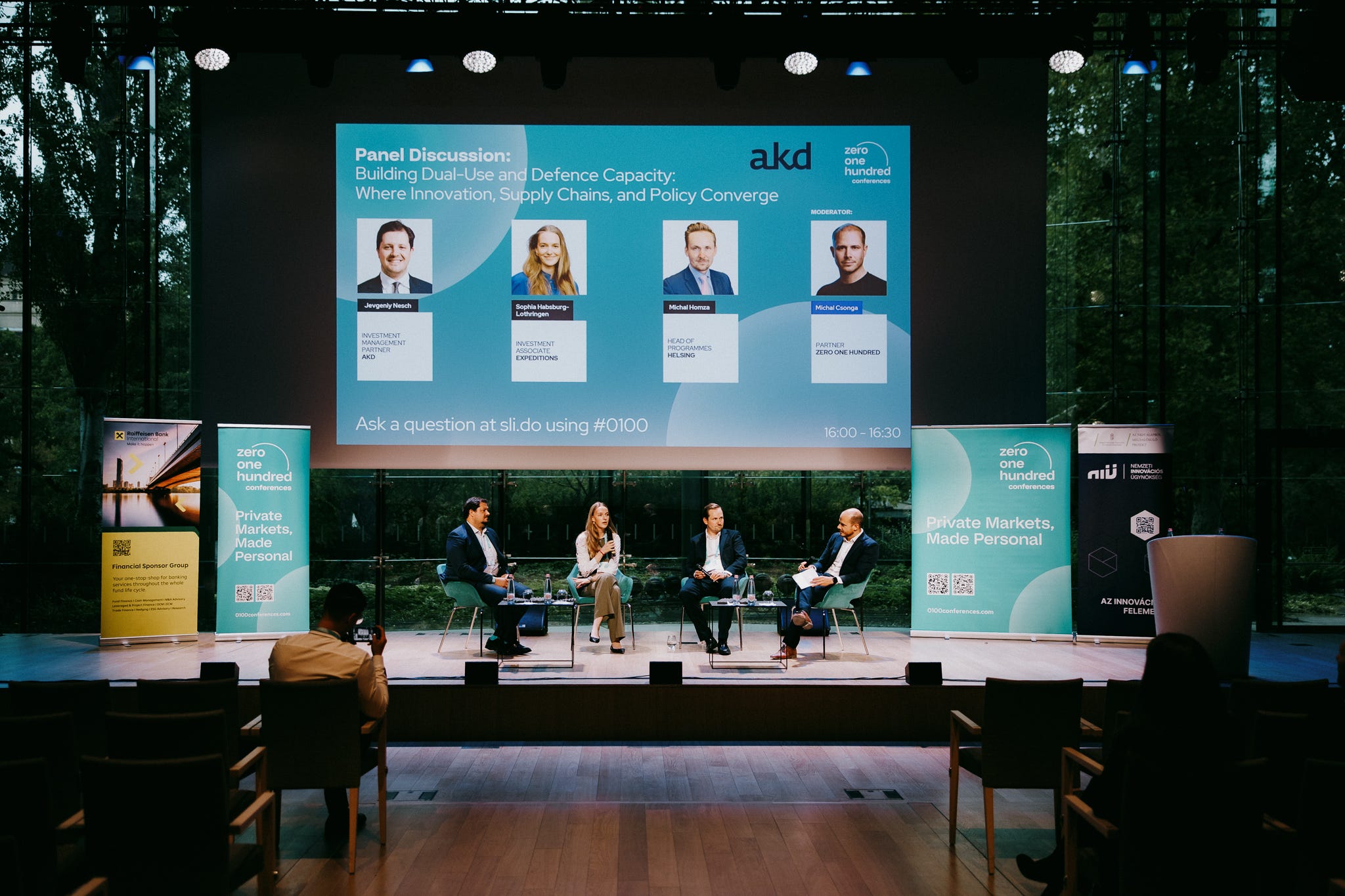
Poland has since received a first €6.6bn payout, 15% of its allocation. SAFE is government procurement debt, not venture capital, but it sets demand. European defense-tech startups raised a record $1.6bn in 2025, up from $1bn the year before.
Defense and security are now a defining CEE category
Security and defense accounted for four of CEE’s 13 largest rounds in 2026, while deeptech’s share of the largest deals fell to about 15%. The four were:
Cyber Swarm (Romania): a $50m Series A for brain-inspired chips that run AI on-device at low power.
Alcatraz AI (Bulgaria-founded, US-based): a €45.5m ($50m) Series B for facial-authentication access control that replaces badges and detects tailgating.
Uforce (Ukraine-founded): a $50m seed round backed by Lakestar, Shield Capital, Ballistic Ventures and Iron Wolf Capital.
Frankenburg (Estonia): a €30m Series A from SmartCap and Plural for missile-interception and counter-drone systems. Vestbee calls Estonia Europe’s leading air-defense hub and SmartCap the Baltics’ most consequential public-backed defense allocator.
Space is following the same path
Bulgaria’s EnduroSat raised $205m on September 16, valuing it at more than $1bn. It was founded in 2015 in a 25-square-meter attic in Sofia with four engineers. It has launched 103 satellites and delivered more than 200 craft, and it plans a space and defense hub on a former military airbase near Sofia.
US firms Riot Ventures and Atreides Management co-led the round, with the European Innovation Council, GV, Founders Fund and Lux Capital also participating. It was the third nine-figure European space raise in two weeks, after Open Cosmos (€300m) and The Exploration Company ($450m).
Smaller CEE bets sit beneath it. Poland’s Sybilla Technologies, which tracks objects in orbit for EU SST, ESA and the Polish Space Agency, raised €8m from TCEE Fund IV (advised by 3TS) and BGK’s Vinci.
GapMinder made its first space-technology bet, a €1.2m investment, alongside Fil Rouge Capital, in Croatia’s Genesis Space Flight Laboratories. Microbiologist Bence Matyas founded Genesis in 2025. Its GEN-1 capsule, 5.9cm across and about 250g, flew on a suborbital rocket in May. GapMinder says it reached about 260 km and returned with nine experiments.
Dedicated capital is forming
Poland: Expeditions closed a €197m second fund at more than double its initial target, focused on defense and dual-use technologies. The EIF and BGK backed Expeditions and Balnord.
Ukraine: Ukrainian tech raised $498m in 2025, with defense tech the fastest-growing segment at over $129m. Resist.UA has opened a €50m fund built around battlefield-tested technologies.
Founders build global from day one
CEE founders don't wait to go international, partly because they can't afford to. Domestic markets are small, so the best companies aim at the US or the wider EU from the start. The ECB observes that successful start-ups in small, developed VC markets often target global expansion early, which draws in US investors with deeper pockets and international networks.
That is a strength, but it has a cost: many of these founders end up counted as American.
The clearest evidence: Y Combinator
Y Combinator’s directory lists 30 startups from Central and Eastern Europe. Borys Musielak from SMOK Ventures just counted 155.
The gap exists because YC tags companies by headquarters, and most CEE founders move to California. YC's own batches make this easy to see. In YC's Spring 2025 cohort, just nine of 143 startups were European by HQ, but 22 had at least one European founder.
An independent analysis of the YC directory flags the same blind spot: European founders who incorporate in the US are counted as American companies.
Where economies are growing fast.
Borys Musielak also analyzed Eurostat regional GDP data for European metro areas with GDP above €10bn, measuring nominal growth in euros from 2015 to 2023.
He found that 18 of the 20 fastest-growing cities were in Romania, Bulgaria, and Poland. Faster-growing local economies tend to mean larger customer bases, deeper talent pools and, over time, more domestic capital.
The early talent pipeline points towards the same trends. Mircea Ghita from Metis Ventures reviewed International Physics Olympiad results from 2000 to 2026, counting gold, silver, and bronze medals. Romania leads CEE narrowly with 120 medals, ahead of Ukraine (119) and Hungary (118), and the gap widens at the top, with 42 golds against 23 for Hungary and 13 for Ukraine.
Olympiad medals measure the elite end of technical education, not entrepreneurship, but that end feeds the engineering-heavy fields where CEE is now raising money, such as AI, defense, and space.
Let’s continue the conversation in Milan!
This week’s brief follows up on a question from Budapest: Who funds the next stage of growth?
CEE's evidence is real, from companies selling worldwide to defense and space rounds. But let’s look at what's happening at the European level, with Alexander Thees, Co-CEO and Senior Managing Director of KfW Capital, and the EIF's Head of Venture Capital & Technology Investments joining us.
The panel examines the wave of state-backed venture initiatives underway, from the EIF's new €15bn fund-of-funds platform to Germany's WIN initiative, France's Tibi program, and the Scaleup Europe Fund. It also asks whether this institutional approach can close the scale-up financing gap, attract private capital, and produce globally competitive technology champions.