

Growing Appetite, Growing Capital: Is CEE Entering a New Private Equity Cycle? – 0100 Weekly Brief


Hello there,
For years, Central and Eastern Europe was viewed as a promising region that never quite reached critical mass for private equity. Strong entrepreneurs were there. Economic growth was there. But institutional capital remained limited, and private markets struggled to scale.
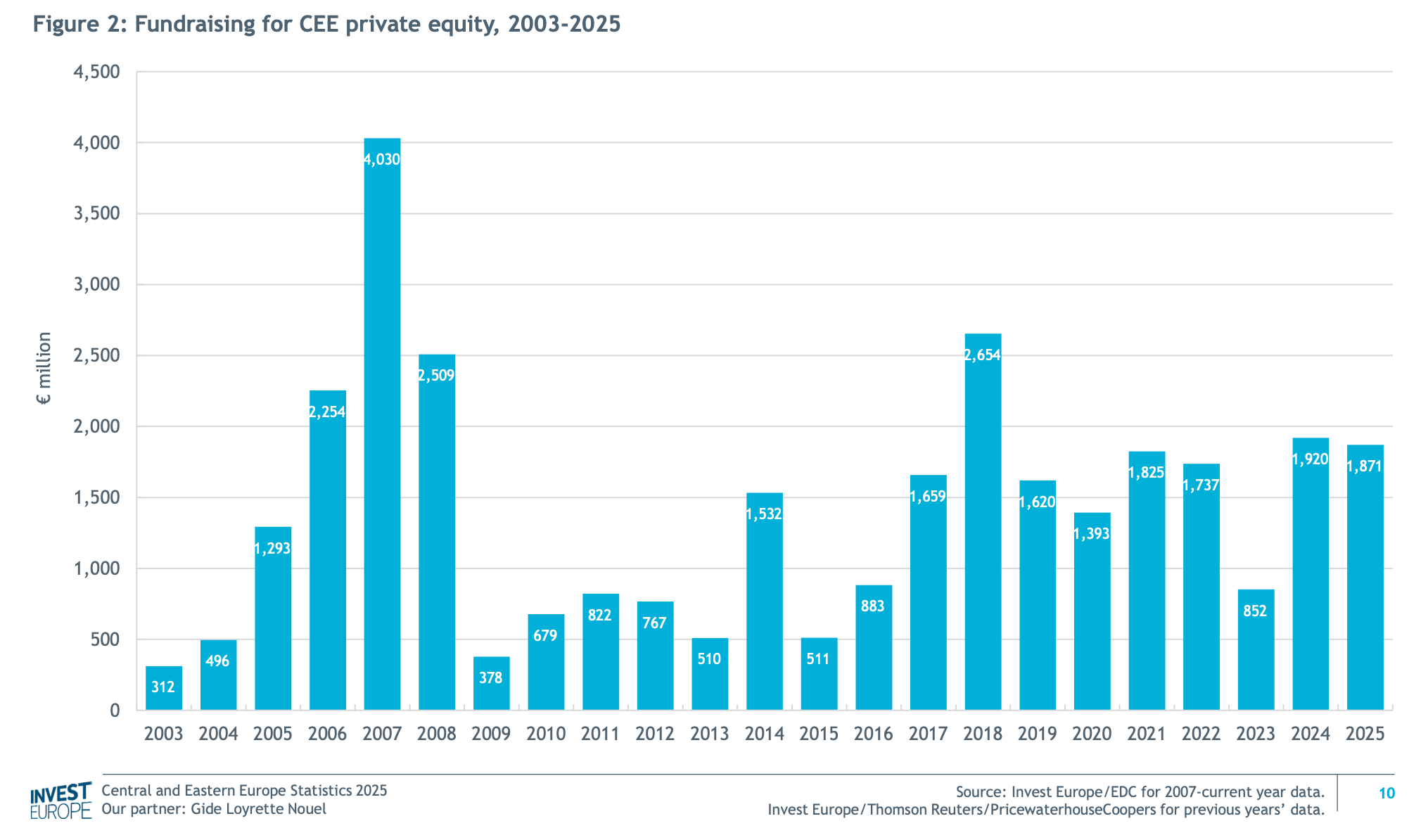
The latest data from Invest Europe suggest this trend is already showing up in the market itself. Despite a challenging global fundraising environment, CEE private equity funds raised €1.87 billion in 2025, the second-strongest fundraising year since 2018 and 21% above the region's five-year average.
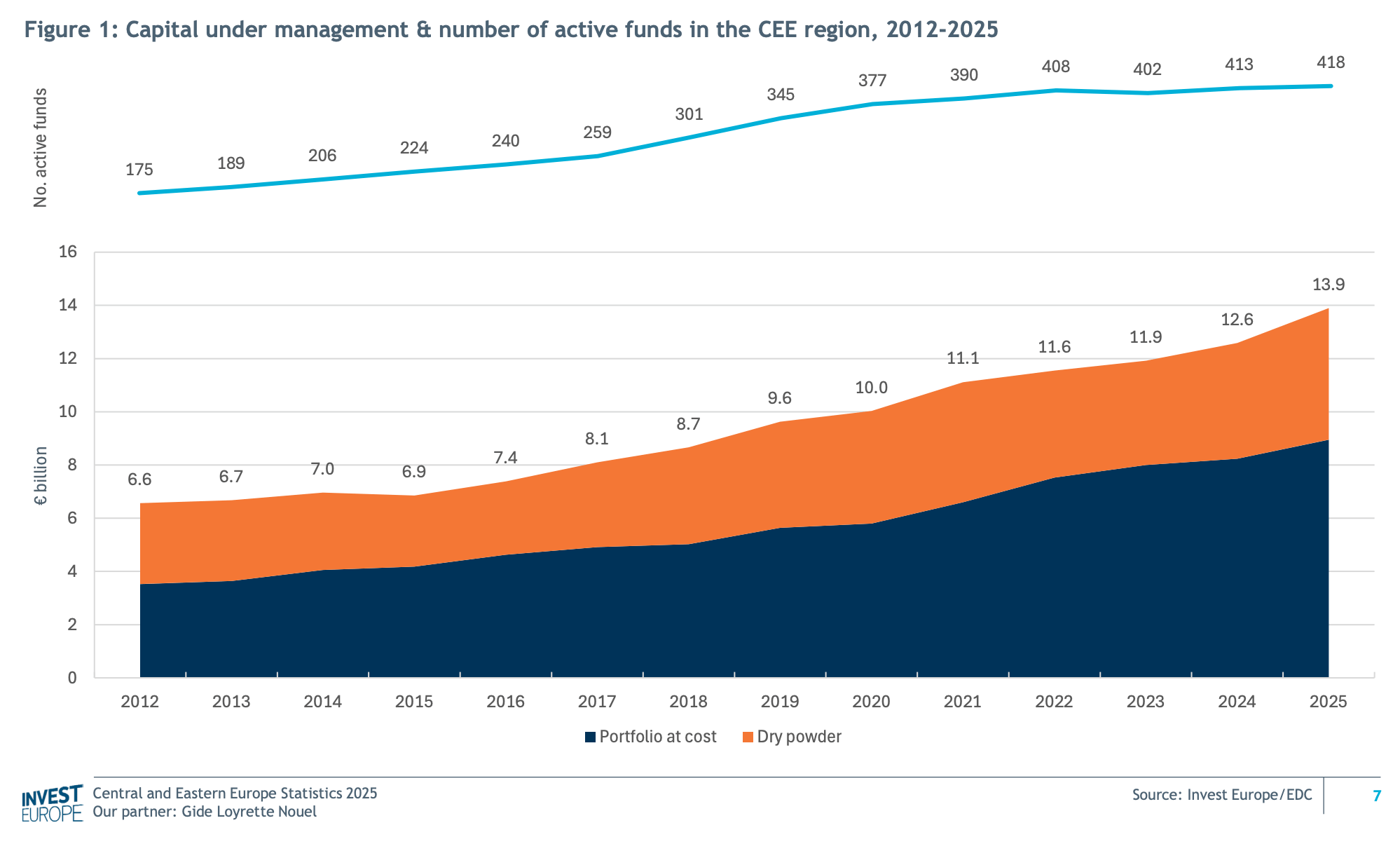
New data from Preqin suggests that CEE investors are no longer sitting on the sidelines. Their allocations to private markets are approaching Western European levels, regulatory reforms are expanding access to alternative assets, and local fund managers are raising increasingly sophisticated vehicles.
CEE Investors Are Closing the Allocation Gap
According to Preqin, investors across Central and Eastern Europe allocated an average of 27.5% of their portfolios to private markets as of May 2026, only two percentage points below the European average.
For years, the discussion around CEE focused on catching up with more mature markets. Today, investor appetite appears largely aligned with the rest of Europe. The gap is becoming less about willingness to invest and more about the availability of high-quality investment opportunities.
Just as importantly, confidence remains strong. Nearly 64% of LPs in the region expect to allocate additional capital to private equity over the next 12 months, comfortably above the European average of 57%. Only 29% report no plans for new commitments. This suggests institutional investors are not simply maintaining existing allocations; they are actively preparing to deploy more capital.
Policy Is Slowly Expanding the Capital Base
Private markets do not grow on investor appetite alone. They need institutions capable of deploying long-term capital. That is where recent policy developments become interesting.
The Czech Republic’s pension reforms now allow a significant share of pension funds to offer alternative investment strategies. Slovakia has eased regulations around infrastructure investing. Bulgaria is debating broader access to alternative assets for pension funds.
None of these reforms will transform fundraising overnight. Collectively, however, they point toward a larger structural trend. Across Europe, governments are looking at pension capital as a source of long-term financing for innovation, infrastructure, and private enterprise. CEE appears to be moving in the same direction.
Domestic Capital Is Beginning to Drive the Market
Perhaps the most significant change is where the capital is coming from.
For the first time in years, investors based within Central and Eastern Europe supplied 56% of all capital raised by CEE private equity funds, up from 40% a year earlier and the highest level since 2019.
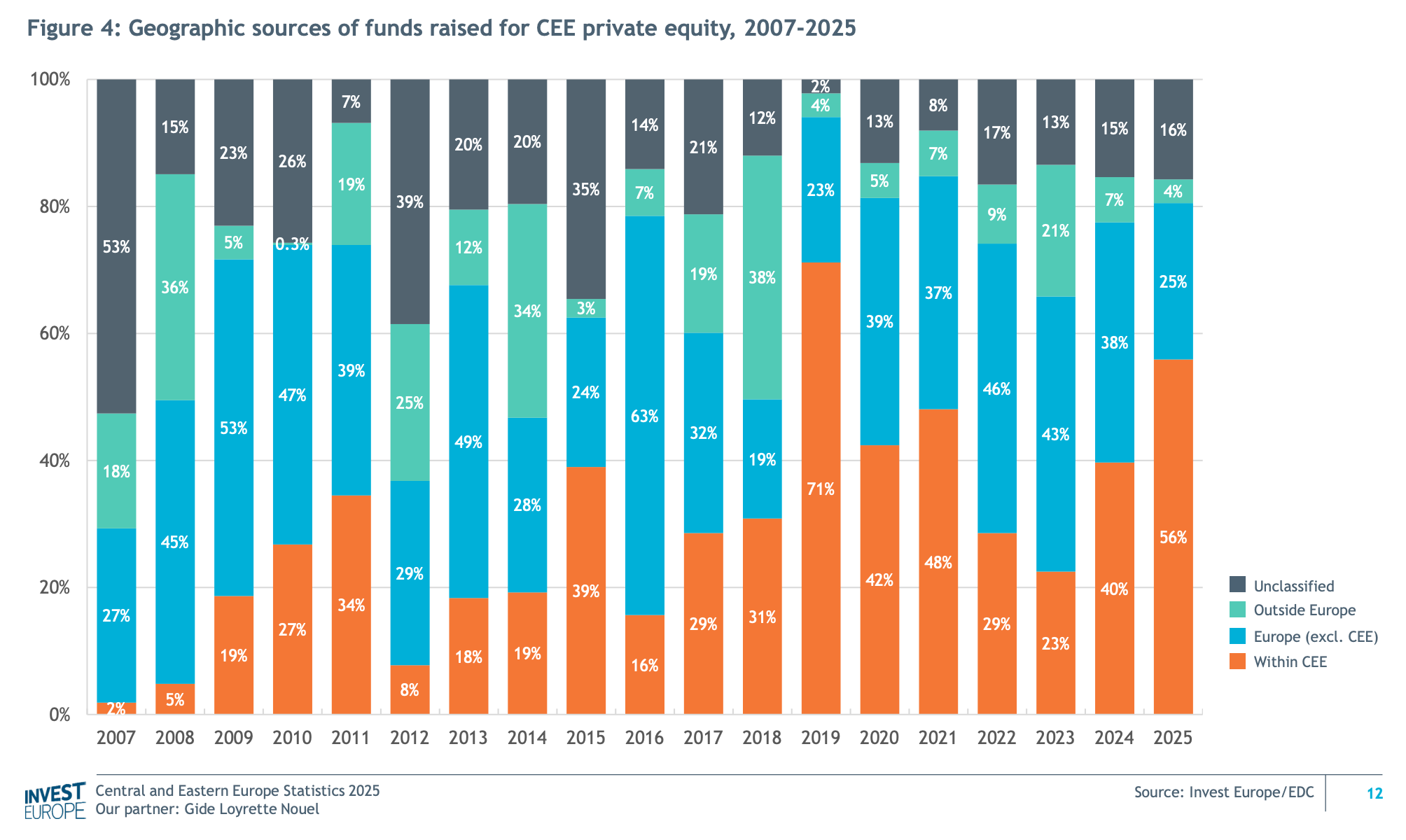
Family offices and private individuals became the region’s largest source of capital, contributing 26% of fundraising, while government agencies accounted for another 22%. Together, the figures suggest that CEE is gradually becoming less dependent on international investors and increasingly capable of financing its own private-market ecosystem.
A Stronger Economy Creates Better Conditions for Private Equity
Private equity ecosystems rarely develop independently from the broader economy. Capital tends to follow growth. Recent macroeconomic performance has given investors additional reasons for optimism.
Poland, Croatia, and Bulgaria all expanded by more than 3% last year, outperforming many of Europe’s largest Western economies. At the same time, while foreign direct investment into Europe declined overall, Poland recorded a 10% increase, highlighting continued international confidence in the region’s largest economy.
Economic growth alone does not build a mature private equity market. However, it creates the conditions that matter: stronger businesses, more acquisition opportunities, higher investment activity, and ultimately a larger pipeline of companies capable of attracting institutional capital.
Growing allocations matter only if they translate into investment activity. The latest Invest Europe data suggests they are.
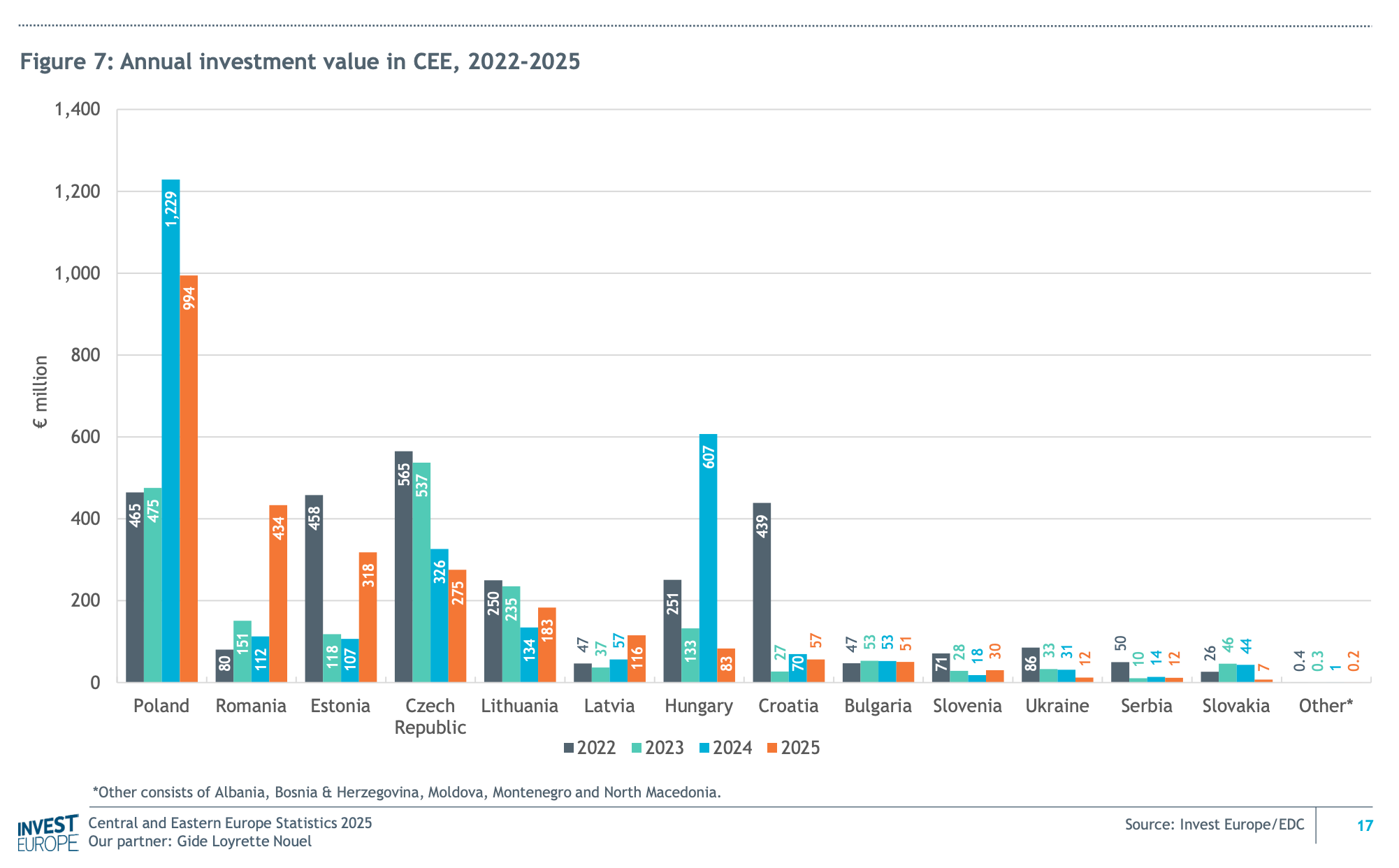
Private equity firms invested €2.57 billion across Central and Eastern Europe in 2025, backing 341 companies throughout the region. While total investment value was modestly lower than the previous year, the slowdown reflects the absence of the unusually large transactions that defined earlier periods rather than weaker underlying activity.
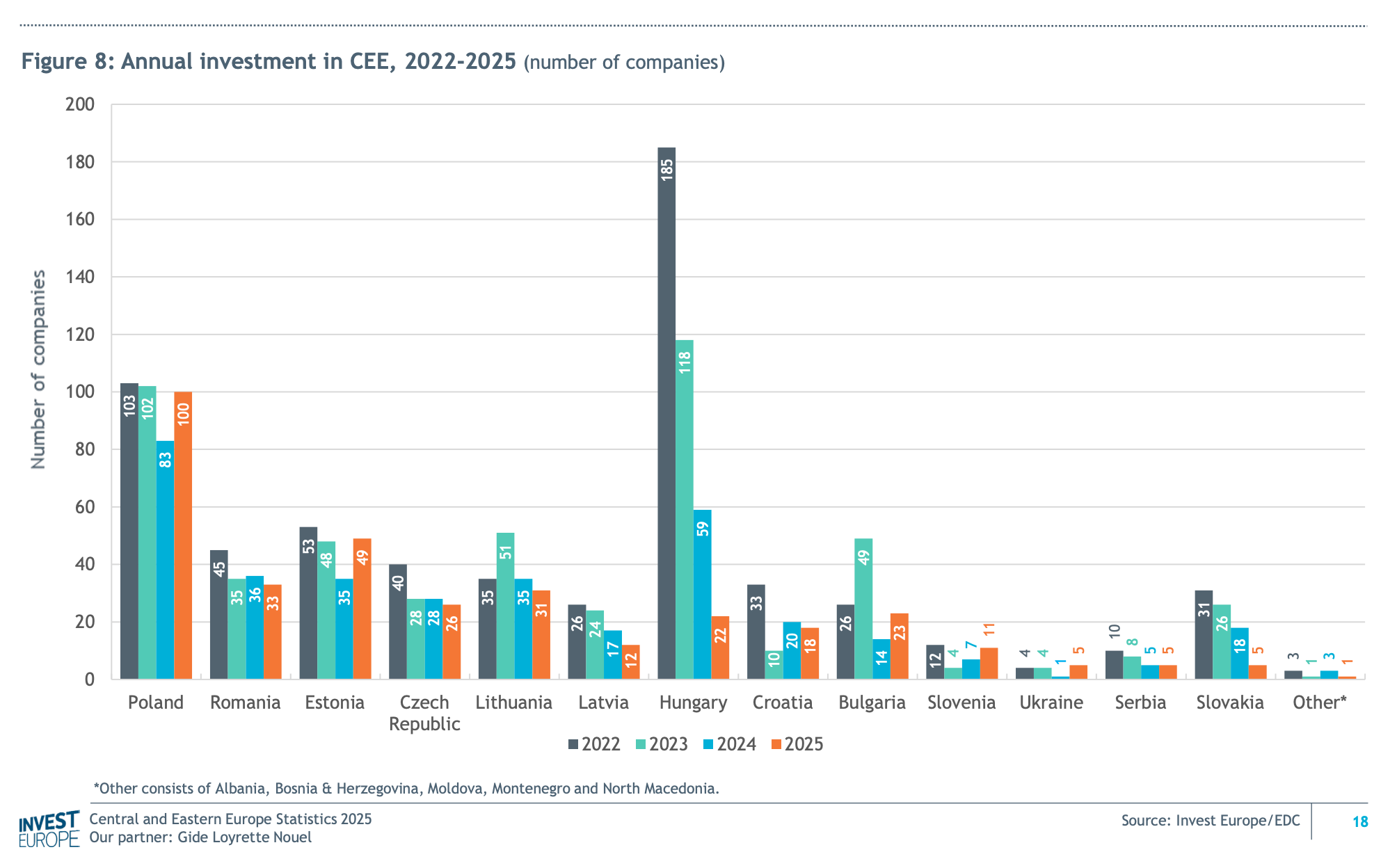
The market continues to be driven by the mid-market, where local fund managers have traditionally been most active.
The geographic distribution of investments also illustrates the breadth of today’s opportunity set. Poland remained the region’s largest private equity market, attracting nearly €1 billion of investment in 2025, while the Czech Republic, Romania and Estonia continued to record meaningful deal activity. Rather than concentrating on a single market, private capital is being deployed across a broader regional ecosystem.
Sector allocation tells a similar story. Technology, communications and electronics represented the largest share of investment for a second consecutive year, accounting for 34% of invested capital and almost half of all portfolio companies backed. Business services and healthcare also attracted increasing investor attention, reflecting a growing emphasis on scalable, innovation-driven businesses rather than traditional industries.
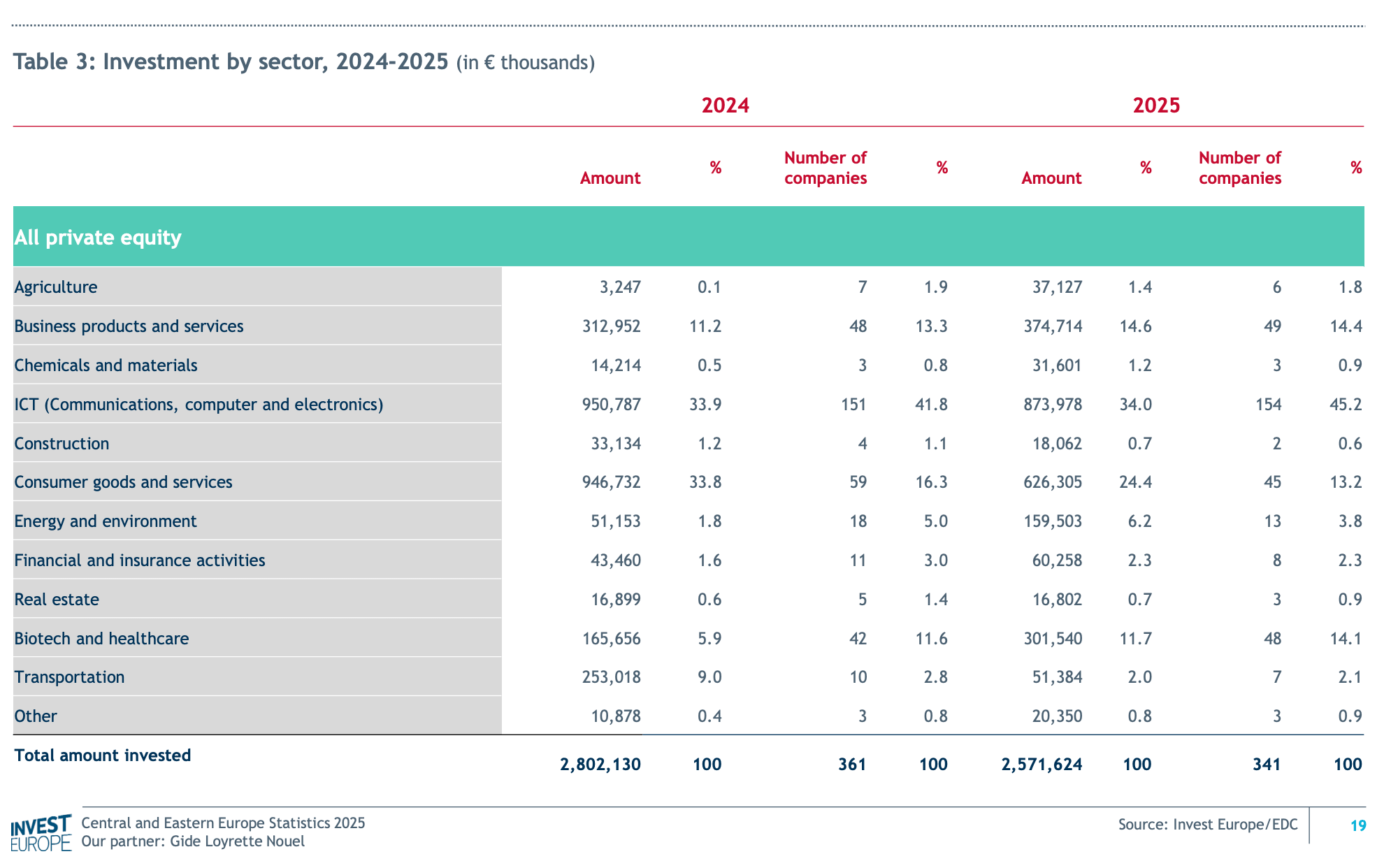
Taken together, the data suggest that CEE’s private equity market is becoming both broader and more sophisticated. Investors are not simply deploying more capital—they are backing a more diversified set of sectors and companies across the region.
Fundraising Suggests the Market Is Maturing
Investor appetite is increasingly being matched by manager activity.
As of May 2026, CEE had already recorded 57 private equity fund inceptions, equivalent to roughly three-quarters of the total recorded in 2025. Individual fundraising announcements reinforce the same trend.
Lithuania’s INVL Asset Management secured an additional €410 million for private equity investments. Genesis Capital completed a €225 million first close for its newest SME-focused vehicle. Slovenia’s Advance Capital Partners closed a €249 million debut fund.
Individual fundraising is also part of a broader trend. Buyout funds alone attracted more than €1 billion in new capital in 2025, representing 54% of all fundraising in the region and more than twice the previous five-year average. Growth equity fundraising also grew strongly, while venture fundraising remained moderate after unusually strong previous years.
Healthy ecosystems are rarely built by a single oversized vehicle. They emerge when multiple managers consistently return to market, raise larger successor funds, and develop long-term relationships with institutional investors. That is precisely what CEE is beginning to demonstrate.
Let’s Continue the Conversation at 0100 Emerging Europe
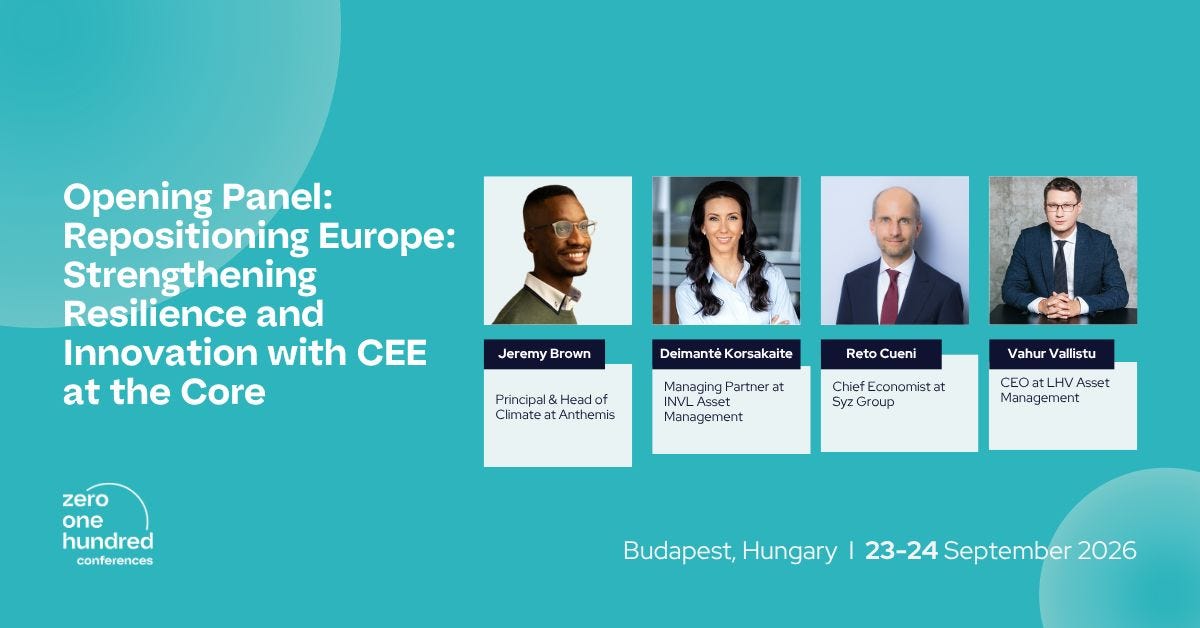
As Europe accelerates investment in strategic autonomy, industrial resilience, and innovation, Central and Eastern Europe is becoming an increasingly important part of the conversation.
The session will examine how the region is helping strengthen Europe’s competitiveness, attract long-term capital, and build the industries that will shape the continent’s future.
Joining the discussion are leaders investing across the region, including:
Deimantė Korsakaitė, Managing Partner at INVL Asset Management, one of the Baltics’ leading private equity investors.
Jeremy Brown, Principal & Head of Climate at Anthemis, brings a European perspective on innovation and climate investing.
Vahur Vallistu, CEO of LHV Asset Management, one of the region’s largest institutional investors.
Together, they’ll discuss how investors should think about CEE’s evolving role within Europe’s broader investment landscape and where the next opportunities are emerging. We look forward to continuing the conversation in Budapest.