


Hello there!
This week, we’re looking at how venture is increasingly about digital infrastructure, not just the startups themselves, but the systems behind deal-making, ownership, governance, and liquidity.
Let’s walk through how the VC landscape is changing, what the data tell us, and what investors and founders should be watching.
From Funding Startups to Building Infrastructure
Historically, VC meant backing high-growth startups and hoping for a big exit. But today we’re seeing more emphasis on the infrastructure that makes VC transactions, ownership, and portfolio management smoother, faster, and more transparent.
A recent Data Driven VC Landscape 2025 report shows many firms are using automation, AI, and data tools to improve sourcing, evaluation, and support of startups.

On the other side, many VCs are prioritising startups that bring digital backbone assets (like infrastructure-as-a-service, software platforms, data management) rather than purely consumer-growth plays. The PitchBook Q2 2025 Infrastructure SaaS VC Trends report shows investment in infrastructure-SaaS firms reached US$4.4 billion in Q2, the second-highest total on record.
Meanwhile, digital infrastructure, the physical and software systems underpinning AI, cloud computing, data centres, and more, is becoming a major asset class. The Infrastructure Investor 2025 Digital Report states that demand for data centres and other digital infrastructure is set to triple by the end of the decade, highlighting that digital-ready businesses and investors are positioning for the long haul.

The Rise of Tokenisation in VC
Tokenised fund interests, fractional ownership, and blockchain-enabled assets are also gaining traction.
The World Economic Forum’s 2025 report on Asset Tokenization in Financial Markets projects that the combined private equity and venture capital market could reach $7 trillion by 2030, with around 10% of that total expected to be tokenised.
Additionally, 73% of European fund managers expect private equity and venture capital to be among the first asset classes to experience significant tokenisation, led by the need for more transparency, easier secondary trading, and wider participation.
Tokenisation offers the advantage of reducing operational friction, improving access, and opening new investment models. The opportunity is big, but so are the challenges. While tokenisation can simplify how venture funds and startups raise and manage capital, real-world liquidity remains low, and regulatory standards are still evolving.
For now, tokenisation offers more promise than volume, but progress is clearly underway.
📝 Expert Round-up | Reimagining Private Assets
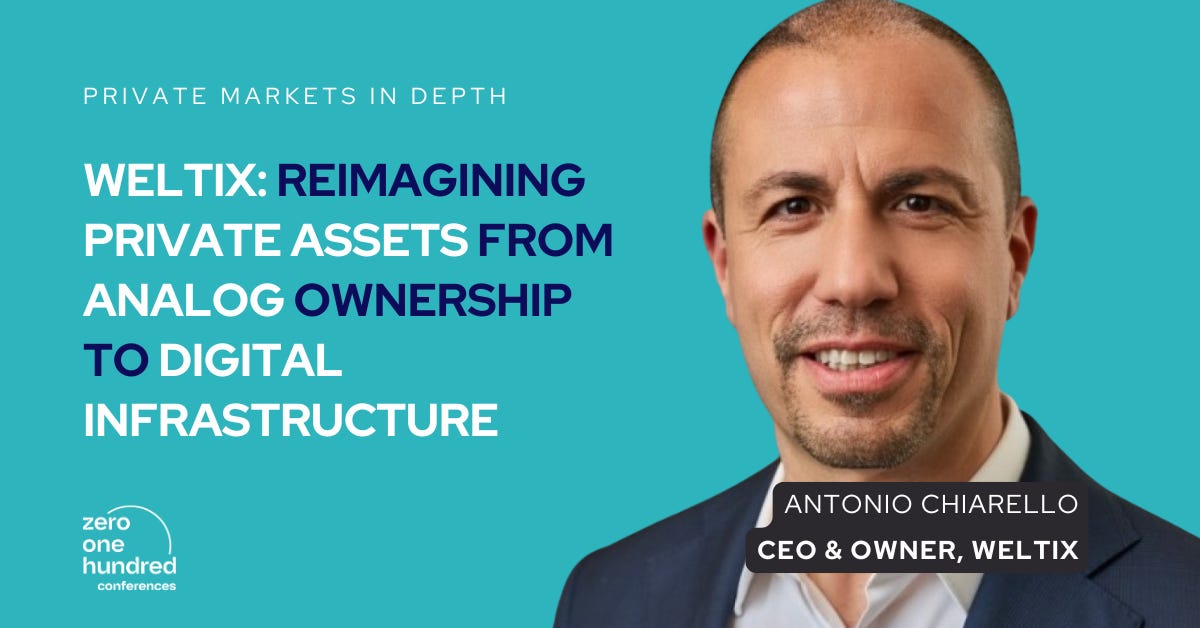
Private markets are finally catching up with the digital world. For years, investing in private assets has meant dealing with piles of paperwork, notaries, and slow, manual processes. Weltix, led by CEO Antonio Chiarello, wants to change that.
The company is building a secure, regulated digital system where private assets can be issued, owned, and traded entirely online. By combining blockchain technology with strong legal and compliance frameworks, Weltix is turning an old, paper-based market into a faster, more transparent, and trustworthy digital space.
Supported by new European regulations like Italy’s FinTech Decree, Weltix helps investors and companies move away from analog systems toward digital ownership and automated processes. The goal is to unlock more capital for growing businesses while giving investors a smoother, safer way to participate in private markets.
🎧 Podcast Spotlight | Financing the Net-Zero Future

Europe’s energy transition is entering a new phase, one powered not just by wind or solar, but by the digital systems that connect them. In this episode of 0100 Impact Talks, Dr. Till Stenzel, Partner at SET Ventures, shares how the next wave of decarbonization will rely on data, software, and smart infrastructure to make energy cleaner and more efficient.
SET Ventures has been investing in this vision since 2007, shifting from early hardware bets to financing the “intelligence layer” of Europe’s energy system, from grid flexibility and industrial electrification to smart buildings and storage. Dr. Stenzel also discusses the challenges of scaling startups across Europe’s fragmented regulatory landscape, but remains optimistic that the region’s digital maturity and investor momentum give it an edge.
👋 Hello from 0100 International in Milan!


We’ve just kicked off 0100 International 2025, and the energy here is incredible. Investors and fund managers from across Europe are gathering to exchange ideas, make new connections, and explore what’s next for private markets.
The conversations started yesterday at our Welcome Dinner, where great food met even better company, a perfect start to two days of insights, networking, and collaboration.
🌍 Across the Ecosystem | News & Useful Resources for You
Everyone in venture capital is talking about digitalization, and for good reason. From fundraising and deal sourcing to portfolio management and secondary trading, digital tools are changing how investors operate and how startups raise capital. Across the ecosystem, fund managers, founders, and regulators are exploring how technology can make venture investing more transparent, efficient, and accessible.
Here’s a look at what’s happening across the industry:
📚 Report | Asset Tokenization in Financial Markets
Tokenization allows assets to be recorded and traded digitally, which helps improve transparency and reduce costs. The report shows how this technology could change key areas like how investments are issued, managed, and financed, thanks to features such as shared digital records, smart contracts, and fractional ownership that make it easier for more people to invest.
The WEF says that real progress will come when banks, regulators, and tech providers work together to create shared frameworks and secure, scalable systems. If that happens, tokenization could make financial markets more efficient and accessible for everyone.
📚 Report | Data Driven VC Landscape 2025
The report shows how data, automation, and AI are influencing venture capital. It maps 235 data-driven VC firms and 100 thought leaders around the world and highlights how digital tools are helping investors find better deals, evaluate startups more objectively, and reduce bias in funding decisions.
Data Driven VC also outlines how the industry is evolving from manual workflows to intelligent systems powered by AI agents and automation. In the past two years, the number of data-driven VC firms has grown by more than 50%, with many now generating up to 40% of their deal flow through data platforms. Yet, most firms admit they’re still early in this journey — facing challenges like data integration, infrastructure, and cost.